
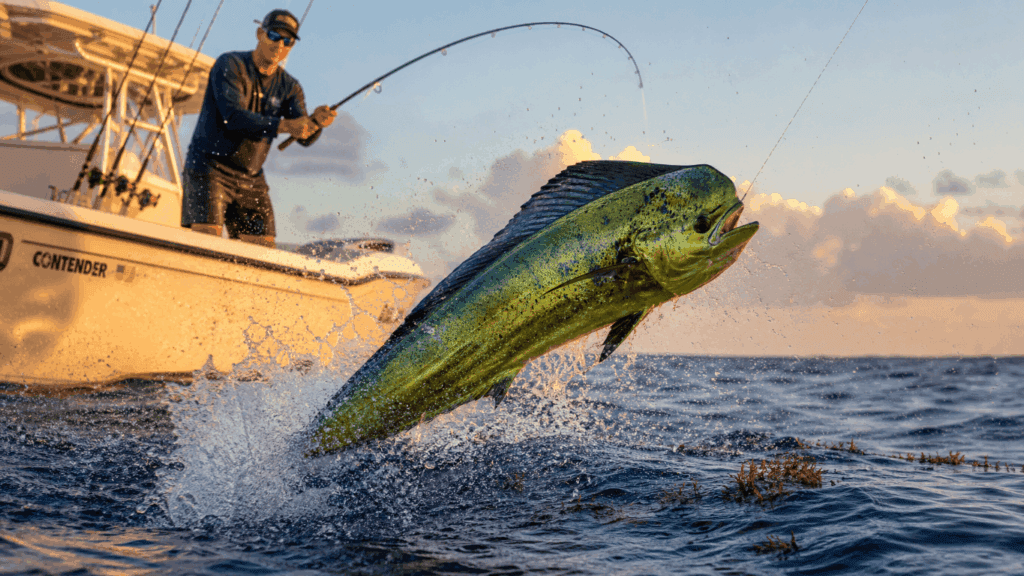
Dorado—also called mahi-mahi or dolphinfish—are one of the most exciting offshore species you can target. They’re fast, aggressive, and famous for explosive strikes and aerial runs. But consistently catching dorado isn’t about luck. It’s about finding the right water, reading the signs, and fishing a clean, effective presentation.
In this guide, you’ll learn the same practical tactics experienced crews use to locate, hook, and land more mahi-mahi—whether you’re trolling open water, working weed lines, or running-and-gunning under birds.
The Dorado Rule: They Live Around “Open-Water Structure”
Dorado are pelagic fish (open-ocean roamers), but they still relate to structure. Offshore, structure isn’t rocks or reefs—it’s anything that collects bait and breaks up the ocean into fishable edges.
The most productive dorado “structure” includes:
- Weed lines / floating sargassum
- Current edges (where two water masses meet)
- Floating debris (boards, logs, pallets, anything that drifts)
- Bait schools and surface feeding
- Bird activity (circling low, diving repeatedly)
Why it works: bait gathers around floating cover and current seams. Dorado patrol those areas looking for easy meals. If you learn to identify these zones quickly, you’ll spend more time fishing where dorado actually are.
Pro tip: Don’t just fish “near” a weed line—fish the best part of it: tight clean edges, thicker mats, intersections, and any section where the line bends or stacks up.
How to Find Dorado Faster: A Simple Offshore Search Pattern
Most anglers lose time offshore by wandering. A better approach is to use a repeatable search pattern that keeps you focused on the highest-probability water.
Use this sequence:
- Run to likely water first
Prioritize cleaner water, signs of life, and visible current features. - Scan for clues
Look for weed, debris, bait flickers, flying fish, and birds working. - Commit to your best sign
Don’t “sample” everything. Fish the strongest clue thoroughly. - Move with purpose if it’s dead
If you’re not getting signs or bites, change areas decisively.
What “good” looks like offshore:
- A defined weed edge (not broken into scattered fragments)
- Birds circling low with repeat dives
- Bait flickering around debris
- A color change line or rip where waters meet
Trolling for Dorado: The Foundation Technique That Finds Fish
If you’re learning how to catch mahi-mahi consistently, trolling is the most reliable starting point because it helps you cover water while presenting a natural, fast-moving target.
Key trolling principles:
- Your lures must track cleanly. If a lure is spinning, skipping, or blowing out, it won’t get bit consistently.
- Speed matters because lure action matters. Troll at the speed that makes your lures swim correctly.
- Use controlled turns. S-turns create speed changes across the spread, which can trigger strikes.
Pro tip: When you get a knockdown or a missed bite, briefly throttle down and then settle back in. That speed change often triggers a second, more committed strike.
Best Lures for Dorado (Mahi-Mahi): What Works Again and Again
Dorado will eat a variety of offerings, but your best “confidence lures” are the ones that run stable, show up well, and match common offshore forage.
Reliable lure categories for dorado:
- Trolling skirts (great search baits)
- Jet heads / bullet heads (stable and easy to troll)
- Feather-style trolling lures (simple and deadly, especially when bait is small)
- Soft plastics rigged for trolling (excellent profile and action)
A simple color approach that works:
- In clear, bright water: natural tones with subtle flash
- In greener water or overcast skies: higher-contrast colors that silhouette better
Pro tip: Dorado often come in mixed-size schools. Keep at least one smaller lure in the spread—this can turn “a few bites” into steady action when fish are feeding on small bait.
Dorado Rigs That Save Fish: Leader, Hooks, and Connections
Many mahi-mahi are lost because the terminal setup wasn’t built for how dorado fight: quick runs, sharp direction changes, and violent head shakes—especially near the boat.
Use this rig checklist to reduce failures:
- Leader: abrasion-resistant leader material helps during boat-side surges and gaff attempts
- Hooks: strong, sharp hooks sized correctly for the lure or bait
- Knots/crimps: clean, reliable connections—no shortcuts
- Drag: set to protect against sudden surges while still driving the hook home
Pro tip: Check hook points often. A slightly dulled hook turns solid bites into short strikes and missed fish.
Weed Lines, Debris, and Current Edges: How to Fish the Best Dorado Water
Once you locate “open-water structure,” don’t just troll past it once. The best dorado fishing happens when you work the right zones intelligently.
How to fish weed lines
- Troll parallel to the edge first to keep your lures in the strike zone.
- Make controlled passes that keep the spread tight and fishing clean.
- Focus on thicker mats, sharp edges, and intersections.
How to fish floating debris
- Approach cleanly so you don’t tangle lines.
- Make your first pass count.
- If you hook one fish, assume more are there—work the area immediately.
How to fish current edges
- Fish the “seam” where waters meet.
- Watch for bait pinned on the edge.
- Use gentle S-turns to vary lure speed and angle.
Pro tip: One floating object with bait around it can be a full stop. Treat it like a mini-reef in open water.
The School Management Secret: Catch More Than One Dorado
This is the skill that separates average days from incredible ones.
Dorado commonly travel in groups. When you hook up, your goal is not just landing that fish—it’s keeping the school with you long enough to catch multiple fish.
How to do it:
- Don’t leave the area immediately. Circle back and keep working the zone.
- When safe and practical, keep a hooked fish in the water briefly. A lit-up dorado can keep others interested.
- Always be ready to pitch. If you see followers, throw a bait or lure to them immediately.
- Control the boat. Good boat handling prevents tangles and keeps lines fishing.
Pro tip: If you see dorado following a hooked fish, that’s your easiest window of the day. A quick pitch bait can lead to instant hookups.
Landing Dorado Without Losing Them at the Boat
Boat-side is where dorado cause chaos: last-second runs, jumps, and head shakes. Many fish are lost within the final few feet.
To land more dorado:
- Maintain steady pressure and keep the fish’s head under control.
- Avoid aggressive “pump and reel” right at the boat.
- Assign roles: one person leads the fish, one person lands it.
- Time the landing when the fish settles and turns broadside.
Safety note: Dorado can thrash violently in the cockpit—especially around hooks. Plan your landing method and control the fish quickly once it’s aboard.
Common Dorado Fishing Mistakes (and Quick Fixes)
Mistake: Running lures that don’t track properly
Fix: Watch your spread—adjust speed, lure placement, or lure choice until everything runs clean.
Mistake: Leaving fish to find fish
Fix: When you get a bite, work the area. Dorado often travel in packs.
Mistake: Weak connections or dull hooks
Fix: Use reliable knots/crimps and check hook points regularly.
Mistake: Ignoring “small” signs
Fix: One bird, one flyer, or one small debris line can lead you to the right water.
Quick Checklist for Dorado Success
Before your next trip, make sure you have:
- A small range of trolling lures in different sizes
- Extra leader material and spare hooks
- A plan to target weed lines, debris, and current edges
- A pitch setup ready for followers
- A clear landing plan to avoid last-second losses
Final Thoughts: Catch More Dorado by Fishing Smarter, Not Harder
Catching dorado consistently comes down to a repeatable process: find open-water structure, present clean trolling baits, manage the school once you hook up, and land fish calmly at the boat. Master those steps and your dorado numbers will climb fast.
If you want to improve even faster, fish with a crew that runs these patterns regularly—because offshore success is equal parts skill, timing, and knowing exactly where to look.